
Nano BEARING TECHNOLOGY
Testing
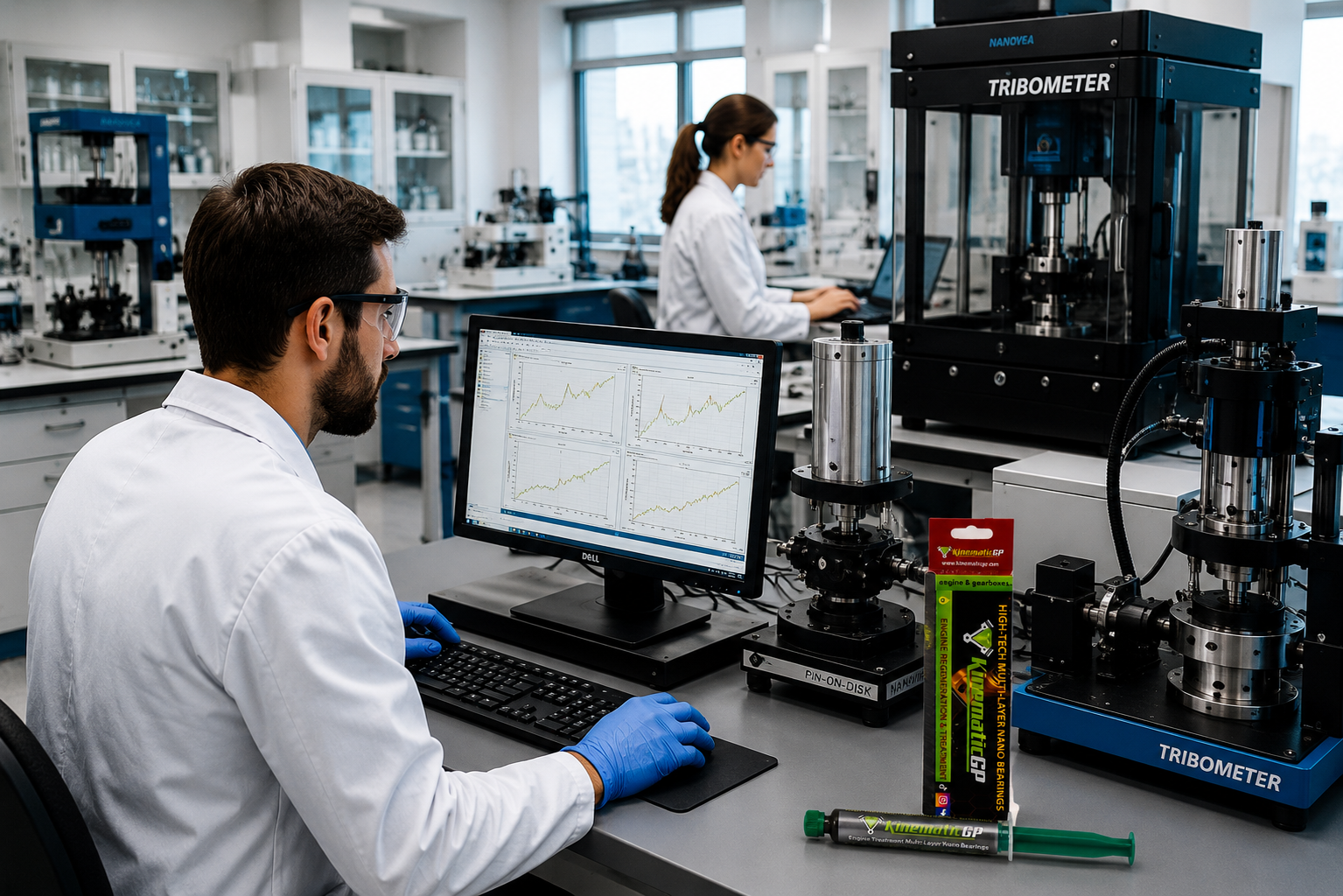
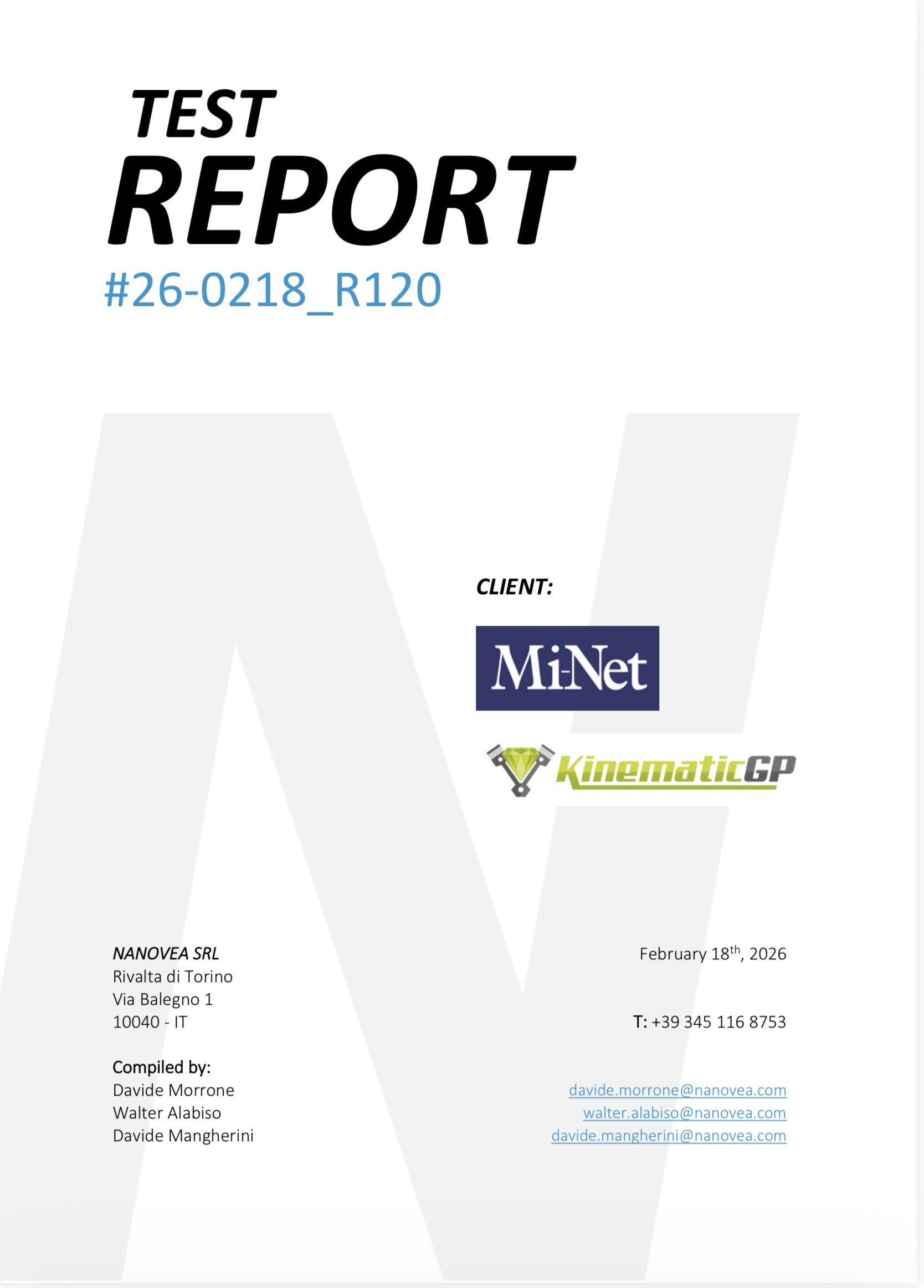
Independent tribological testing was conducted by Mi-Net using advanced tribological test equipment and laboratory methodologies provided by NANOVEA SRL (Italy).
The evaluation included anti-wear performance, friction reduction, load-carrying capacity, and lubricant film stability under controlled laboratory conditions.
Complete test documentation, raw measurement data, and laboratory reports are archived by Mi-Net and may be made available upon individual request to distributors, business partners.
Testing was performed using professional tribological instrumentation supplied by NANOVEA SRL, a manufacturer of specialized testing equipment for tribology, materials characterization, and surface analysis.
The results presented in this report are based on laboratory measurements carried out under controlled and repeatable test conditions.
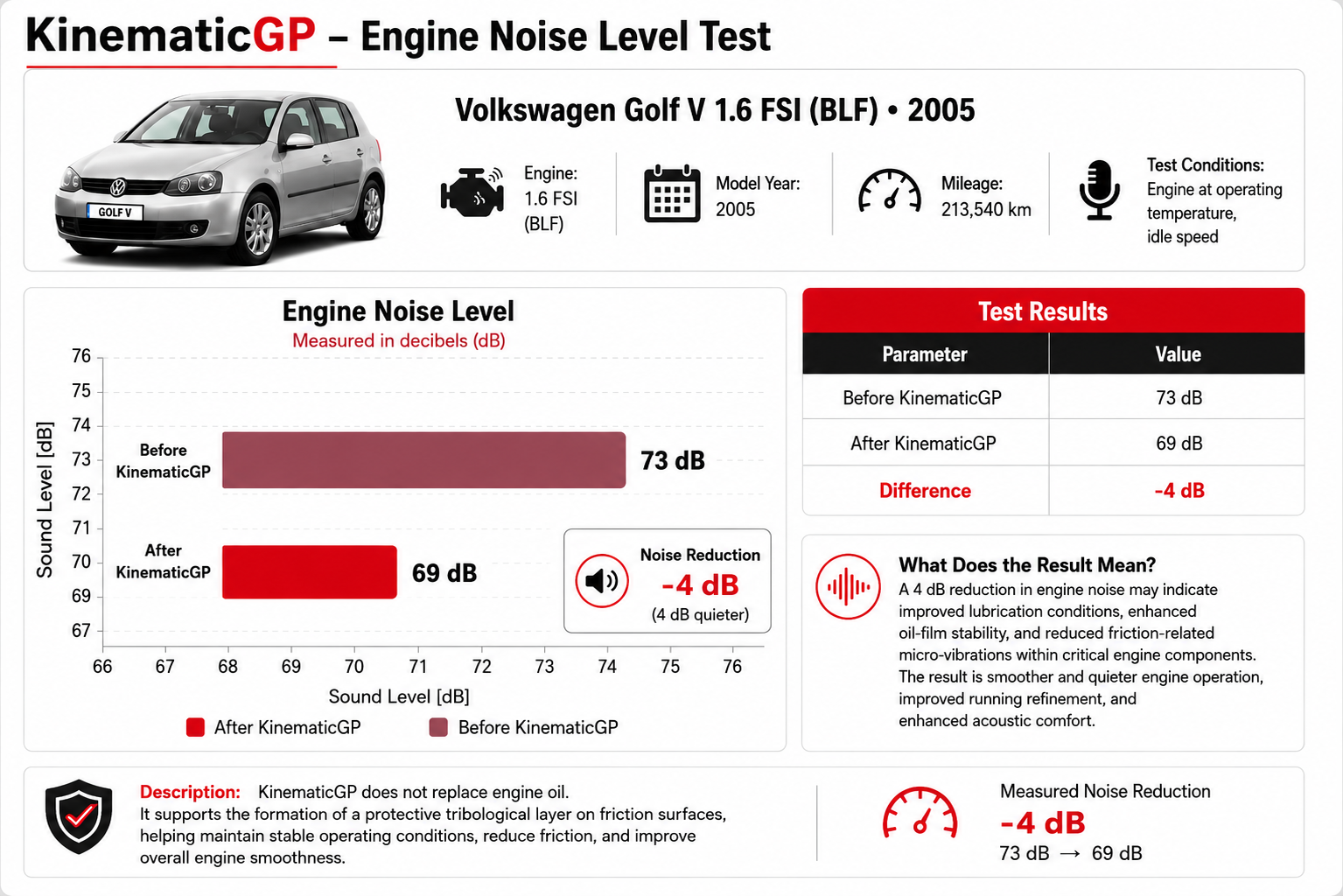
KinematicGP – Engine Noise Reduction Test
Test Vehicle: Volkswagen Golf V 1.6 FSI (BLF)
Model Year: 2005
Mileage: 213,540 km
Test Conditions: Engine at operating temperature, idle speed
After approximately 2,500 km of operation with KinematicGP, the measured engine noise level decreased from 73 dB to 69 dB, representing a reduction of 4 dB.
The observed decrease in noise level may indicate improved lubrication conditions within critical friction zones, enhanced oil-film stability, and reduced micro-vibrations generated during engine operation. These effects can contribute to smoother engine performance, improved operating refinement, and increased acoustic comfort.
KinematicGP is not a replacement for engine oil and should not be considered a repair product. It works alongside the lubricant by supporting the formation of a durable tribological protection layer on friction surfaces. This protective layer helps minimize direct metal-to-metal contact, supports component protection under load, and may contribute to more stable engine operation over time.
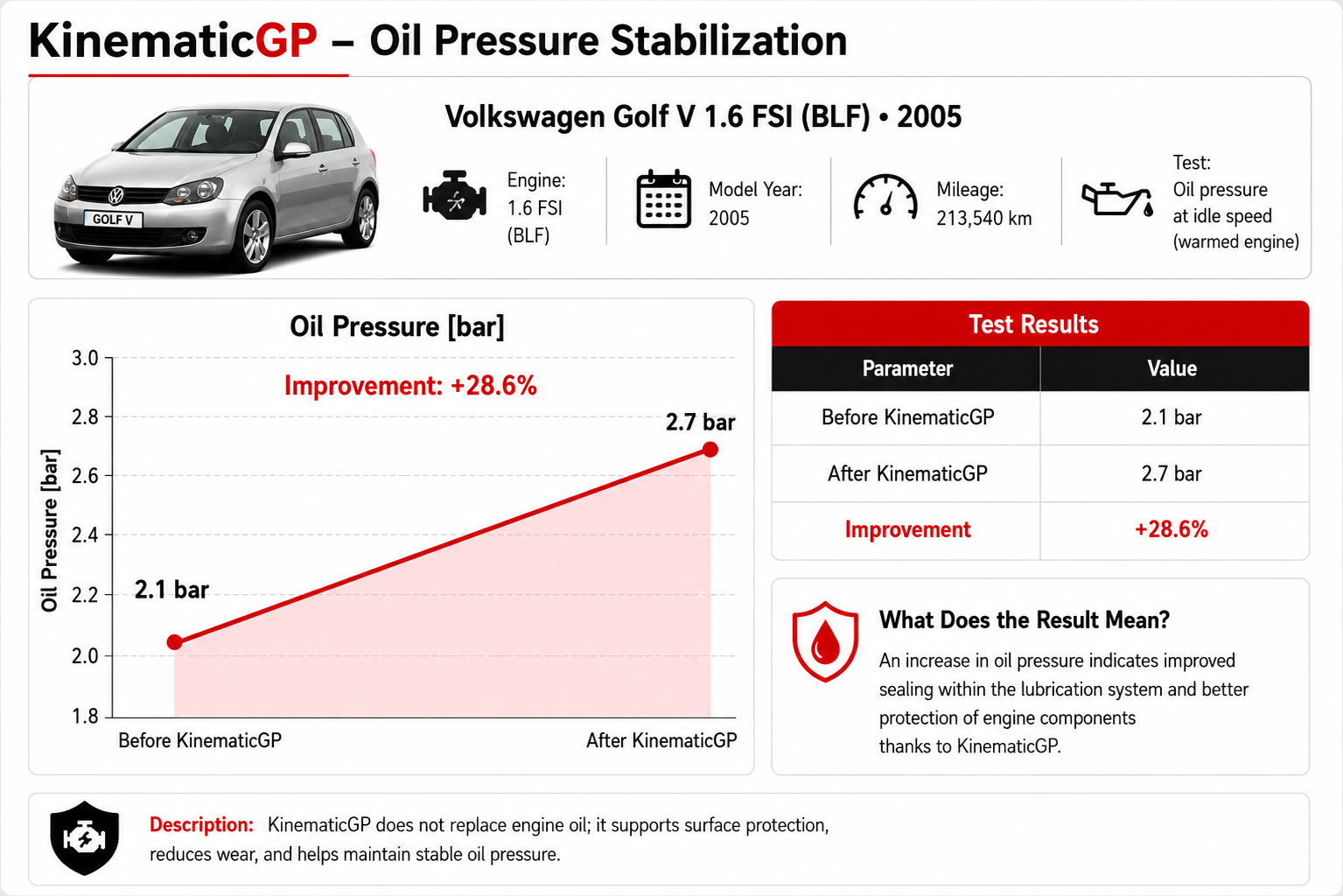
Test Result: +28.6% Increase in Oil Pressure
After approximately 2,500 km of operation with KinematicGP, oil pressure in a Volkswagen Golf V 1.6 FSI increased from 2.1 bar to 2.7 bar.
The result indicates improved oil film stability and enhanced operating conditions within the lubrication system. Higher and more stable oil pressure can support friction reduction, improved protection of moving components, and smoother engine operation.
KinematicGP technology promotes the formation of an advanced protective layer on friction surfaces, helping maintain optimal lubrication conditions even in high-mileage engines.
The test was performed on a vehicle with 213,540 km mileage, using a fully warmed engine at idle speed.
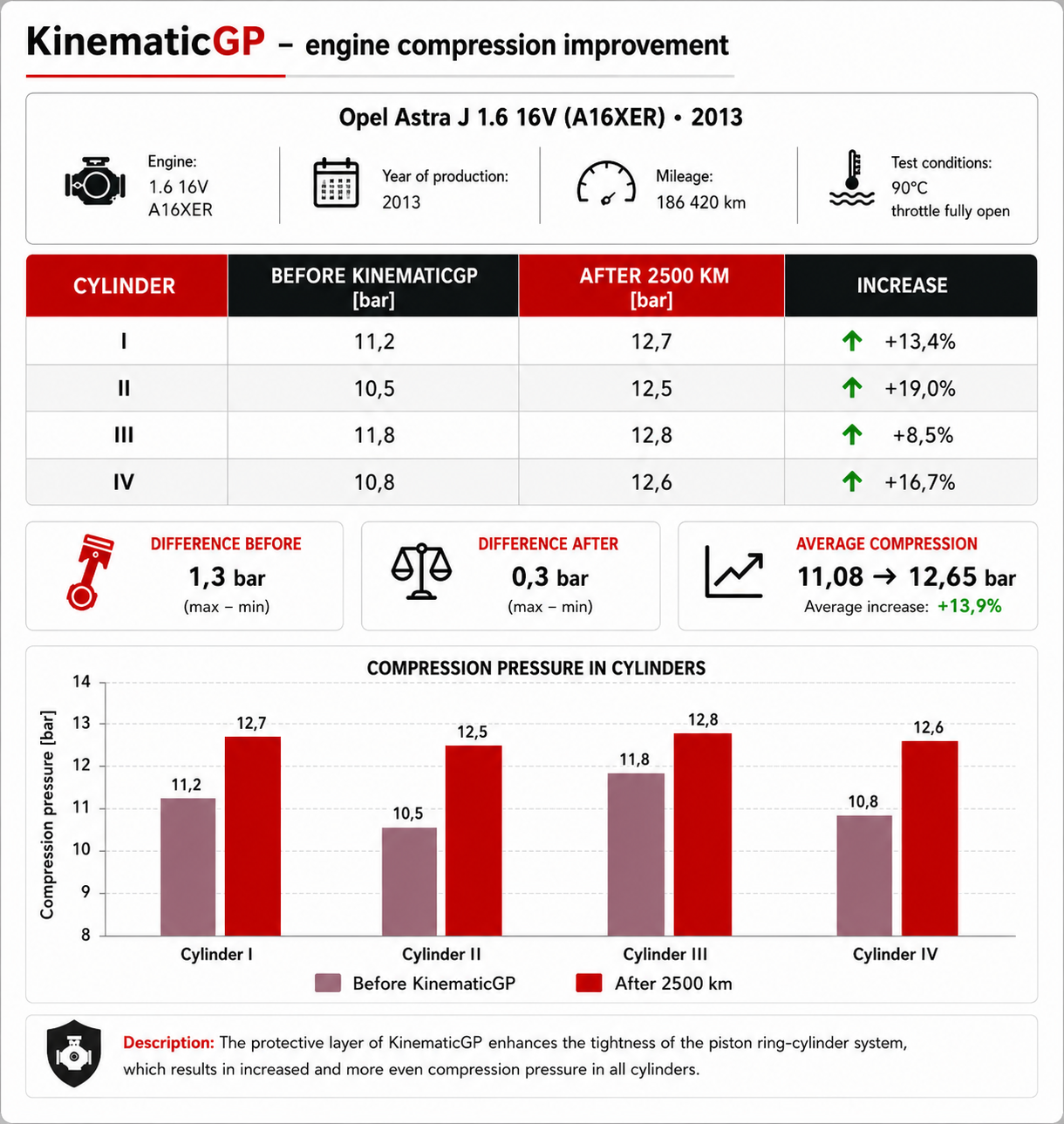
To evaluate the effect of KinematicGP on the sealing efficiency of the piston ring–cylinder interface by analyzing changes in compression pressure across all cylinders.
Results:
Before the test, the difference between the highest and lowest cylinder compression readings was 1.3 bar, indicating uneven sealing performance between cylinders.
After approximately 2,500 km of operation with KinematicGP, the following changes were recorded:
• Average compression pressure increased from 11.08 bar to 12.65 bar
• Compression variation between cylinders decreased from 1.3 bar to 0.3 bar
• Compression values equalized within a narrow range of 12.5–12.8 bar
• Average compression improvement of 13.9%
Conclusion:
The recorded results indicate improved sealing efficiency within the piston ring–cylinder system and a more uniform compression distribution across all cylinders. Compression equalization may contribute to smoother engine operation, more consistent combustion, and improved overall engine performance.
Note:
Results presented are specific to the tested vehicle and operating conditions. Actual results may vary depending on engine condition, mileage, maintenance history, and operating environment.
Independent KinematicGP Boundary Lubrication Tests
Discover the results of independent testing that confirms the effectiveness of KinematicGP technology under boundary lubrication conditions—when the oil film thins out or disappears entirely. These rigorous evaluations include component operation without a pressurized oil supply and an extreme "no-oil" run test, proving the technology's ability to form a durable, protective layer on rubbing surfaces.